Additive Manufacturing News
How do you stay competitive when manufacturing technologies change every single day? Engineers and executives frequently struggle to filter through industry noise to find actionable insights. Consequently, tracking reliable additive manufacturing news has become essential for maintaining a competitive edge in modern production.
By following these rapid developments, you can easily identify breakthrough materials and optimize your supply chains. Therefore, this article analyzes the latest shifts, industrial applications, and emerging trends transforming the sector today.
Key Takeaways
- Rapid Innovation: Material science breakthroughs are continuously expanding the structural capabilities of printed parts.
- Supply Chain Resilience: Distributed manufacturing models are actively reducing dependency on traditional global shipping.
- AI Integration: Machine learning algorithms are successfully optimizing printing parameters and reducing material waste in real-time.
- Regulatory Progress: Aerospace and medical sectors are establishing standardized certification pathways for printed components.
Where to Find Reliable Additive Manufacturing News Daily
Finding high-quality updates can be challenging because the market is flooded with low-quality press releases. However, dedicated industry journals provide deep technical insights and verified data. In addition, subscribing to targeted additive manufacturing news outlets ensures you receive timely alerts about patent filings and corporate mergers.
Furthermore, attending international trade shows like Formnext or RAPID + TCT offers invaluable firsthand exposure to physical machinery. As a result, combining digital newsletters with live networking creates a highly comprehensive information-gathering strategy. You should also follow academic journals to anticipate academic breakthroughs before they reach commercial markets.
Consequently, a structured approach to consuming additive manufacturing news keeps your engineering team ahead of the curve. By filtering out promotional hype, you can focus entirely on scalable technologies that offer genuine return on investment.
Revolutionary Materials Transforming Industrial Production
Material science is currently advancing at an unprecedented pace. For example, high-performance polymers like PEEK and PEKK are rapidly replacing traditional metals in demanding environments. Consequently, manufacturers can now produce incredibly lightweight components that still retain exceptional structural integrity.
In addition, the metal powder market is expanding to include highly specialized alloys designed specifically for laser powder bed fusion. These custom alloys allow for superior thermal conductivity and immense corrosion resistance. Therefore, staying informed via additive manufacturing news helps procurement officers source these cutting-edge materials early.
Furthermore, researchers are making significant progress in developing sustainable, bio-based resins. These eco-friendly materials drastically reduce the carbon footprint of rapid prototyping cycles. As a result, companies can meet strict environmental regulations without sacrificing the mechanical performance of their final parts.
Aerospace and Defense Applications Leading the Charge
The aerospace sector remains the primary driver of industrial 3D printing adoption. Indeed, commercial aviation companies routinely use selective laser sintering to manufacture complex jet engine components. By consolidating multi-part assemblies into a single printed component, they significantly reduce weight and eliminate potential failure points.
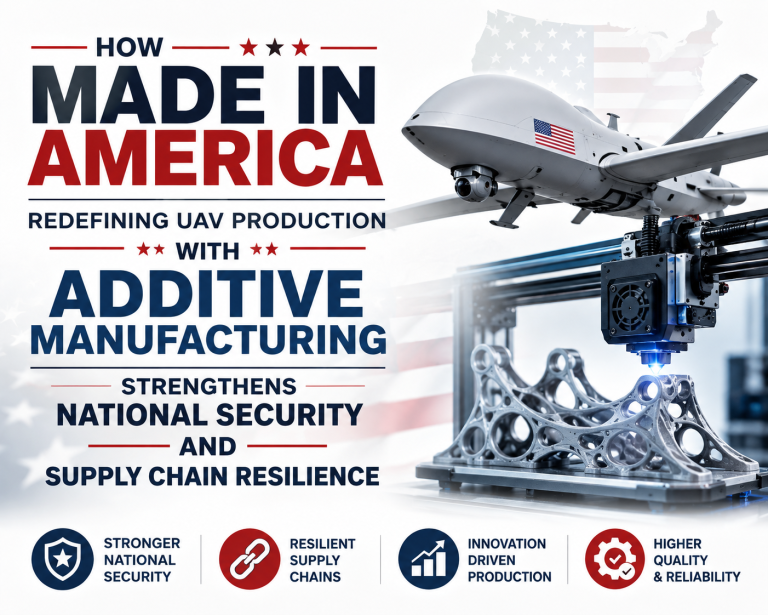
Furthermore, military logistics departments are deploying ruggedized 3D printers directly to forward operating bases. Consequently, soldiers can manufacture critical replacement parts on-demand instead of waiting for traditional supply chains. This capability dramatically improves operational readiness in remote environments.
According to recent additive manufacturing news, regulatory bodies are also streamlining certification processes for printed flight hardware. However, achieving consistent quality control across different printing systems remains a significant hurdle. Therefore, aerospace engineers must continuously monitor software updates and calibration standards to ensure absolute safety.
Healthcare Breakthroughs in Patient-Specific Care
Medical professionals are utilizing 3D printing to revolutionize patient care through highly customized solutions. For instance, surgeons now use patient-specific anatomical models to plan complex reconstructive surgeries before entering the operating room. As a result, operating times are reduced, and patient outcomes improve dramatically.
In addition, biocompatible titanium implants are now routinely manufactured to match a patient’s unique skeletal structure perfectly. These custom implants promote faster bone ingrowth due to their engineered porous surfaces. Therefore, hospital procurement teams monitor additive manufacturing news to integrate these advanced medical devices into standard orthopedic procedures.
Furthermore, the field of bioprinting is moving closer to creating functional human tissues and blood vessels. Although fully transplantable organs are still years away, current research is highly promising. Consequently, pharmaceutical companies are already using printed tissue models to accelerate drug testing and reduce animal trials.
Enhancing Supply Chain Resilience with Distributed Manufacturing
Global supply chains have faced unprecedented disruptions over the past few years. However, distributed manufacturing offers a highly effective solution by shifting production closer to the end consumer. By utilizing digital inventory files, companies can print parts locally and eliminate expensive international shipping fees.
Consequently, businesses can drastically reduce warehousing costs by maintaining digital warehouses instead of physical spare parts. When a component is needed, the local facility simply downloads the file and prints it immediately. Therefore, following additive manufacturing news helps logistics managers understand how to implement this agile operational model.
In addition, this localized approach significantly minimizes carbon emissions associated with long-distance freight transportation. As a result, companies can easily align their supply chain operations with modern corporate sustainability goals. Distributed production ultimately fosters a highly resilient and adaptable business ecosystem.
The Impact of Artificial Intelligence on Print Optimization
Artificial intelligence is rapidly transforming how engineers design and print complex geometries. For example, generative design algorithms can automatically generate highly optimized structures based on specific performance criteria. These AI-driven designs are often lighter and stronger than anything a human engineer could create manually.
Furthermore, machine learning algorithms are now integrated directly into modern printer control systems. These smart systems monitor build chambers in real-time using high-resolution cameras and thermal sensors. Consequently, the software can automatically adjust print parameters or halt failing builds to prevent material waste.
According to recent additive manufacturing news, this real-time defect detection is dramatically reducing scrap rates in industrial factories. Therefore, investing in AI-powered software is becoming a major priority for top-tier manufacturing firms. As a result, the synergy between artificial intelligence and 3D printing is accelerating the transition to fully autonomous factories.
Overcoming Technical Challenges and Scaling Production
Despite the rapid progress, scaling 3D printing to high-volume production presents several unique challenges. For instance, post-processing remains a labor-intensive and costly bottleneck for many industrial users. Removing support structures, polishing surfaces, and heat-treating metal parts often require significant manual intervention.
However, automated post-processing machinery is slowly entering the market to solve this specific issue. In addition, establishing standardized testing methodologies is crucial for ensuring part repeatability across multiple production sites. Therefore, industry consortia are working diligently to create universal manufacturing standards.
Staying updated with additive manufacturing news is essential for tracking these regulatory developments and technical solutions. Consequently, businesses that proactively adapt to these evolving standards will gain a massive competitive advantage. Ultimately, overcoming these post-processing bottlenecks will unlock the true potential of mass customization.
Future Outlook: What Lies Ahead for Industrial 3D Printing
Looking forward, the integration of multi-material printing is set to redefine the boundaries of product design. Specifically, printing conductive electronics directly inside structural polymers will enable the creation of smart components in a single step. As a result, assembly lines will become much shorter and far more efficient.
In addition, the cost of industrial printing systems is projected to decrease as patents expire and competition intensifies. Consequently, small and medium-sized enterprises will gain access to high-end manufacturing capabilities previously reserved for large corporations. This democratization of technology will undoubtedly spark a massive wave of localized innovation.
Therefore, keeping a close eye on industry trends is not merely beneficial; it is absolutely vital for long-term survival. By embracing these technological shifts, forward-thinking businesses can secure their positions at the forefront of the next industrial revolution.
Frequently Asked Questions
What is the most reliable source for additive manufacturing news?
The most reliable sources for additive manufacturing news include dedicated trade publications, peer-reviewed academic journals, and official press releases from leading equipment manufacturers. In addition, attending industry conferences provides direct access to verified research and expert insights.
How is 3D printing helping global supply chains become more resilient?
3D printing enables distributed manufacturing, which allows companies to print parts locally and on-demand. Consequently, this model reduces reliance on international shipping, lowers warehousing costs, and minimizes the impact of global trade disruptions.
Which materials are driving the latest updates in additive manufacturing news?
High-performance polymers like PEEK, advanced metal titanium alloys, and bio-inks are frequently highlighted in additive manufacturing news because of their exceptional mechanical properties and diverse industrial applications.
What role does artificial intelligence play in modern 3D printing?
Artificial intelligence is used for generative design and real-time print monitoring. Specifically, machine learning algorithms analyze sensor data during the printing process to automatically correct errors and prevent costly build failures.
Stay Ahead of the Manufacturing Curve
Never miss a critical industry breakthrough. Subscribe to our curated additive manufacturing news newsletter to receive expert analysis and market updates delivered directly to your inbox weekly.
About the Author